LSA Ads - Speed - to- Lead
The Cost of Slow Follow-Up: Why HVAC Contractors Are Losing Thousands Every Month Without Speed-to-Lead Automation
If you’re spending thousands a month on Google or LSA ads but still struggling to fill your schedule, the problem may not be your ads — it’s yourresponse time.
Below, let’s break down exactly how response speed impacts your cost per acquisition, your Google LSA ranking, and ultimately how much money your ads are making (or wasting).
1. Faster Response = Lower Cost Per Acquisition
The math is simple — the faster you respond to an inbound lead, the higher your conversion rate climbs.
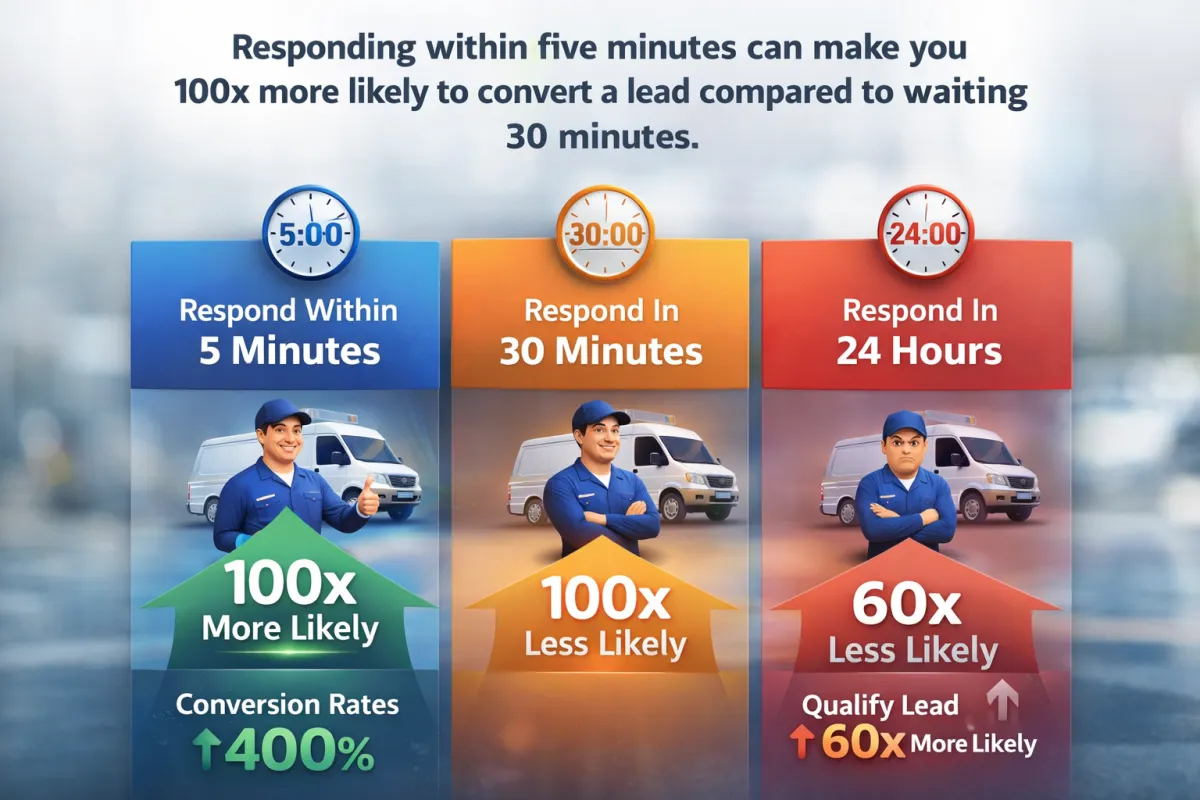
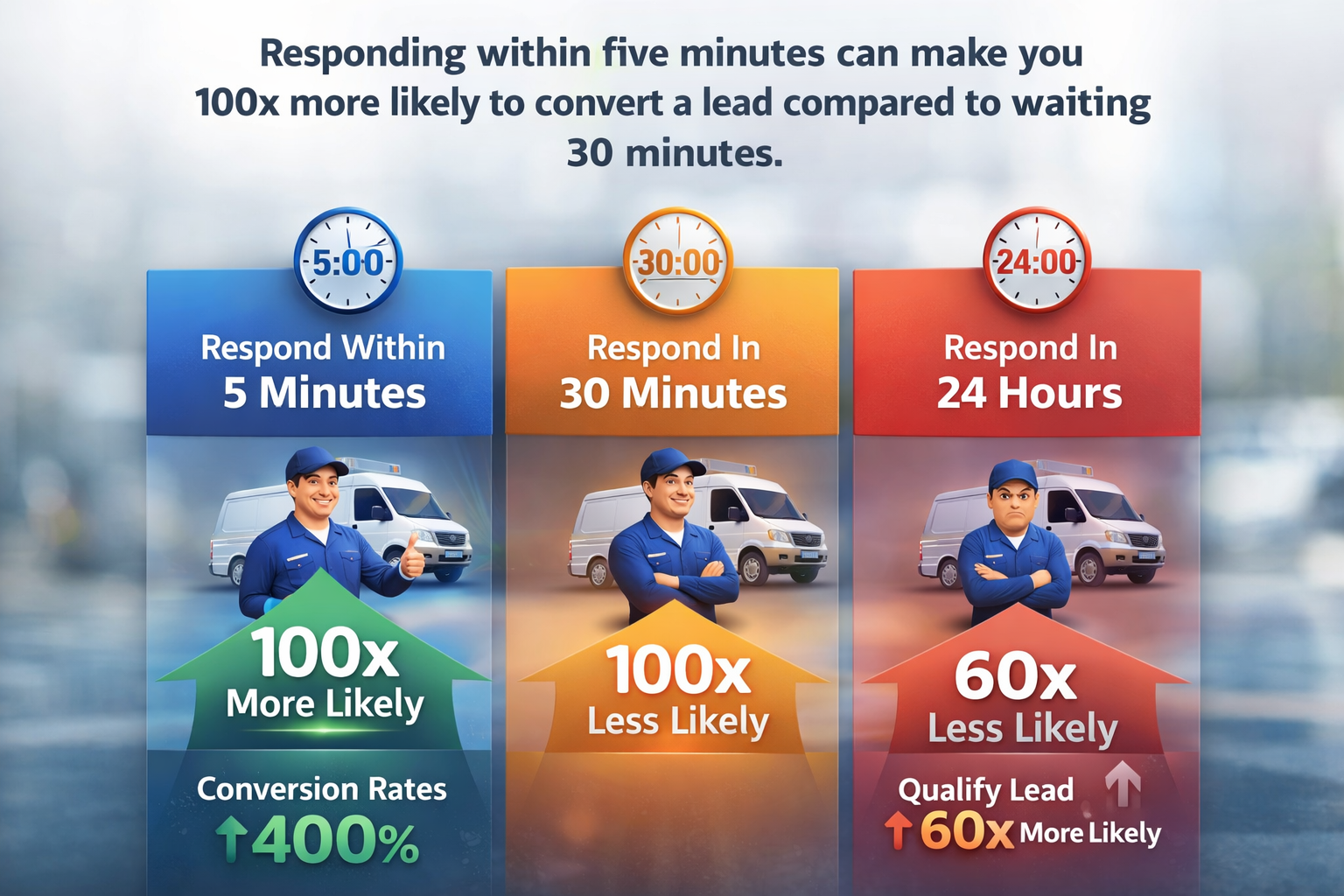
Responding within five minutes can make you 100x more likely to convert a lead compared to waiting 30 minutes.
HVAC businesses that respond within five minutes see conversion rates jump by up to 400%.
Teams responding within one hour are 60x more likely to qualify the lead than those waiting 24 hours.
In plain language: if you’re currently booking1 job for every 20 leads, a sub-5-minute automated response could boost that to 3–5 booked jobs— without spending an extra dollar on ads.
The increase is immediate (you’ll feel it on the very first lead that gets a fast response), and the data impact shows up within 2–4 weeks as enough leads flow through your system.
Businesses using follow-up automation report 30–50% lower cost per lead and significantly better close rates. Considering the average HVAC lead costs $153, that’s a meaningful difference in profit margin per job.
2. Google Rewards Speed — LSA Rankings Improve with Responsiveness
Google’s own documentation confirms it: your average response time affects your Local Service Ads ranking.
Their ranking algorithm tracks how quickly you answer calls, messages, and lead inquiries. Every missed or delayed response tells Google’s system you’re less available — and your ad rank drops.
But the reverse is also true:
Consistent responses within 2–3 minutes start improving ranking visibility within 3–6 weeks.
Google re-evaluates responsiveness on a rolling basis, not monthly, so your performance improvements compound over time.
Faster responders see lower lead costs and more impressions without increasing budget.
In short: automation that ensures instant follow-up doesn’t just fill your schedule — it actually makes your ads cheaper and more visible.
3. Wasted Ad Spend: The Hidden Cost of Slow Follow-Up
Let’s talk about what’s really at stake.
The average business takes 47 hours to respond to an online lead.
78%of buyers go with the first company that responds.
71% of internet leads are wasted due to poor follow-up.
If you’re spending $ 3,000/month on Google or LSA ads and averaging a 47-hour response, you’re likely losing 60–70% of that spend simply by not responding fast enough.
Meanwhile, contractors with lead automation convert the same ad budget into far more booked jobs, because their speed-to-lead system turns every incoming call or form submission into a real conversation within minutes.
For LSA specifically:
Average call cost:$50–$60
Average close rate:55%
Cost per booked job:$110 for contractors who answer — and much higher for those who don’t.
The Compounding Advantage: Reviews + Speed
Let’s be honest: reviews are still the number one factor in your LSA ranking. But speed keeps you visible long enough to collect more of them.
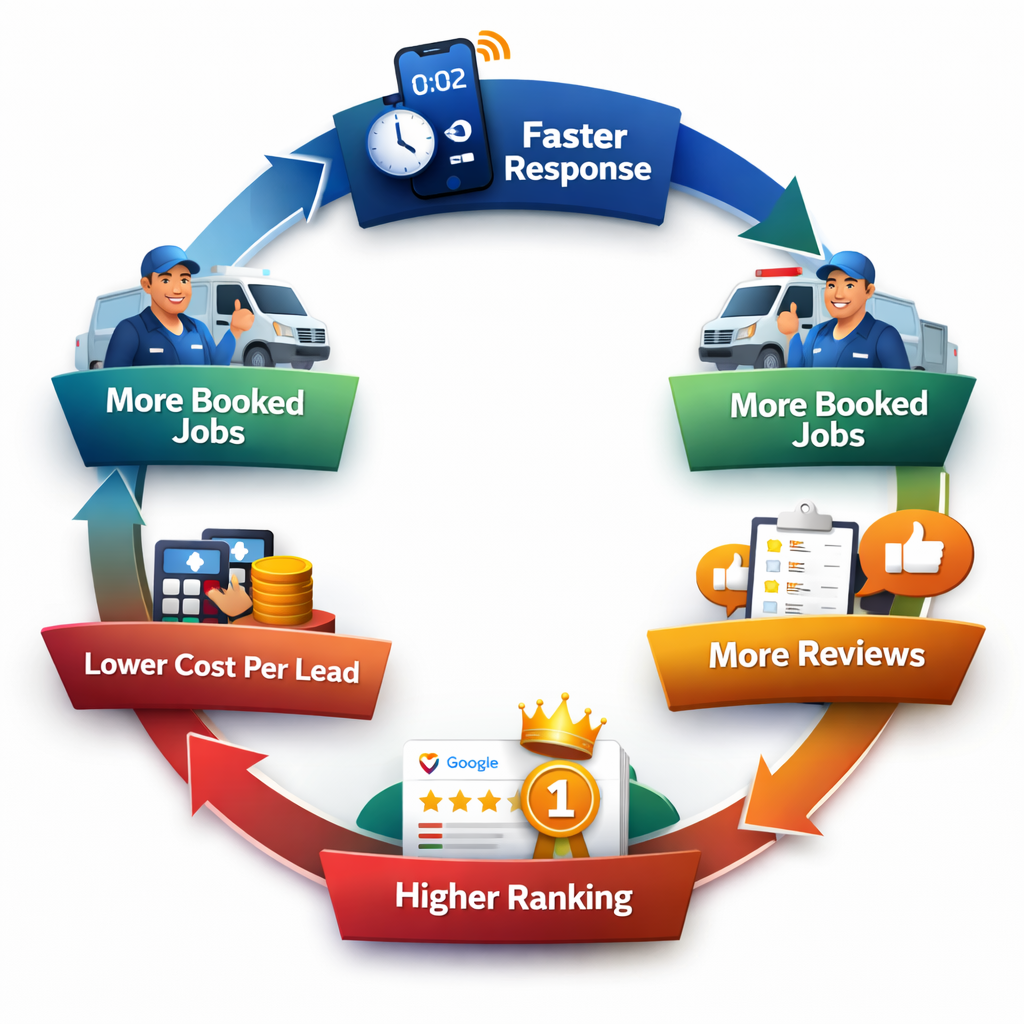
That’s where automation creates a flywheel effect:
faster response → more booked jobs → more reviews → higher ranking → lower cost per lead → more booked jobs.
Bottom Line
If you’re spending on ads but not closing more jobs, it’s not your marketing — it’s your lead handling system. Speed-to-lead automation pays for itself fast, often within the first month, and keeps compounding over time.
Your competitors might have the same ads and reviews, but if you’re first to respond, you’re first to win the job — every single time.
Book an audit here
Want to See How Much You’re Leaving on the Table?
If you’re spending on Google or LSA ads but not seeing the booked jobs you should, we’ll show you exactly where the leaks are.
Book a free Speed-to-Lead Audit, and we’ll:
Analyze your current response time on calls, forms, and LSA leads
Estimate how many booked jobs you’re losing every month to slow follow-up
Map out an automation plan to cut response time to under 5 minutes without adding staff
No pressure, no long pitch — just a clear, dollar-based breakdown of what faster response could be worth in your market.
Click here to request your free audit.
